During the present academic year, Enrique Roger Belloch, junior member of the research group “The Crisis of the Rule of Law in the European Union”, led by Prof. Susana Sanz Caballero, Professor of Public International Law at CEU Cardenal Herrera University, has undertaken two significant academic activities that contribute to strengthening the project’s research agenda and enhancing its international outreach.
A graduate in Law and in Political Science and Public Administration, and having completed the Master’s Degree in Humanities and Social Studies during the same academic year, Enrique Roger Belloch carried out a research stay at the University of A Coruña during the months of May and June under the supervision of Prof. Pedro Serna Bermúdez, Professor of Philosophy of Law and one of Spain’s leading scholars in the field. This research stay formed part of his doctoral research project, supervised by Prof. Leopoldo García Ruiz, Professor of Philosophy of Law, Dean of the Faculty of Law, Business and Political Sciences at CEU Cardenal Herrera University, and member of the same research group. The fact that Professor García Ruiz himself completed his doctoral dissertation under the supervision of Professor Serna has further reinforced a fruitful academic and scientific continuity between both institutions.

The research conducted during this stay focused on the historical evolution of the concept of ius, tracing its development from the understanding characteristic of Classical Legal Realism, in which law is conceived as the res iusta (the just thing), to the formulations of modern legal thought, in which subjective rights emerge as powers or entitlements inherent to the individual. This historical and philosophical inquiry provides a particularly valuable framework for understanding the evolution of different conceptions of the Rule of Law, showing how the Anglo-American tradition of the Rule of Law and the Continental European concept of the Rechtsstaat rest upon distinct philosophical assumptions whose analysis is essential for understanding the contemporary crisis of the Rule of Law within the European Union.
This line of research is directly connected with the scientific objectives of the project, insofar as the study of the philosophical foundations of the legal order contributes to a deeper understanding of the contemporary challenges affecting the Rule of Law in Europe and the effective protection of the common values enshrined in the Treaties of the European Union.
Furthermore, from 21 to 26 July, Enrique Roger Belloch participated in the international IN ALTUM programme, held in Washington, D.C., devoted to the study of the spiritual foundations and the values underpinning Western societies. The programme brought together scholars from a wide range of disciplines to reflect on issues concerning constitutional democracy, human dignity, liberty, the separation of powers, and the protection of fundamental rights from a comparative perspective.

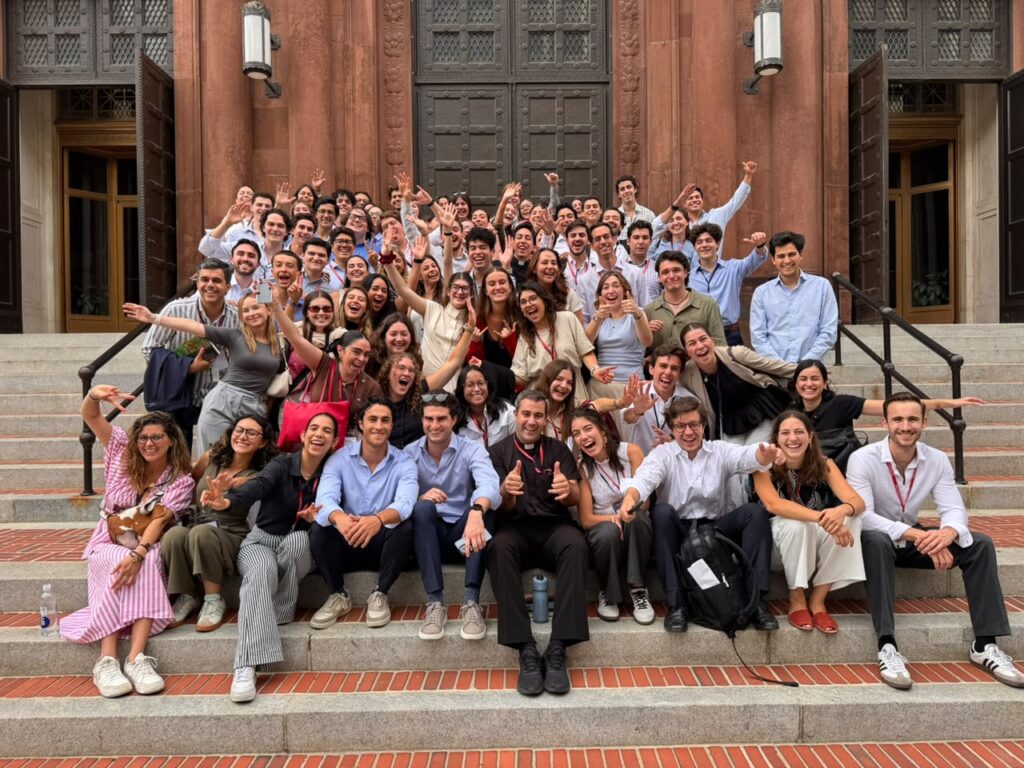
Participation in this international initiative provided an opportunity to deepen the analysis of the axiological foundations of contemporary constitutionalism and their close relationship with the values enshrined in Article 2 of the Treaty on European Union, the protection of which constitutes one of the central objectives of the research project. At a time when the Rule of Law is facing increasing challenges in several Member States, the study of the philosophical, legal and institutional foundations of these values is of particular importance for understanding the mechanisms through which the European project seeks to preserve and strengthen its constitutional order.
Together, these two academic activities reflect the commitment of the research group “The Crisis of the Rule of Law in the European Union” to rigorous, internationalised and interdisciplinary research training. They also illustrate the group’s commitment to promoting the study of the foundations of the Rule of Law through an approach that integrates Philosophy of Law, Public International Law and European Union Law, while fostering the consolidation of networks of academic excellence at both the national and international levels.