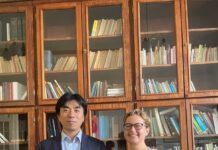
José Antonio De Yturriaga Barberán is a Spanish ambassador and a professor of Diplomatic Law at the Complutense University of Madrid and at the International University of La Rioja. He holds a degree in Law from the University of Seville, a PhD from the Complutense University of Madrid, and an honorary doctorate from the Moscow State Linguistic University. He has taught International Law and Diplomatic Law at the Complutense University, UNIR, the Diplomatic School, and the Hague Academy of International Law. He joined the Diplomatic Service in 1963. He has served as head of the International Legal Department, technical secretary-general, president of the Higher Council for Foreign Affairs, ambassador to Iraq, Ireland, and Russia, permanent representative to the United Nations in Vienna, and ambassador-at-large for the Law of the Sea. He is also a member of the Andalusian Academy of History and an honorary member of the Russian Academy of Sciences, and he has received numerous national and international decorations.

Author of (among others):
- Participation of the UN in the Decolonization Process,
- Regional Conventions on the Protection of the Marine Environment,
- Straits Used for International Navigation,
- The International Regime of Fisheries,
- Areas of Sovereignty and Jurisdiction in the UN Convention on the Law of the Sea, Portugal, Iraq and Russia: Diplomatic Portraits of Sensitive Missions,
- Ideas for a Renewed Foreign Policy,
- Liberia, Ireland and Austria: Diplomatic Portraits, Compendium of Diplomatic and Consular Law,
- Politicization of Justice in Spain,
- Equatorial Guinea: Fifty Years of Independence, Catalonia Seen from Abroad,
- Spanish Sahara: A Conflict Still Unresolved, New Facets of Spanish Politics, Facets of Spanish Politics 2021–2025,
- The Law of the Sea Conference Seen from Within by a Spanish Delegate.
In this interview, José Antonio De Yturriaga addresses the situation of the Rule of Law in the context of current international conflicts, the crisis of institutions and of international law, and explains the state of the Rule of Law in Spain.
INTERVIEW:
General Questions on the Rule of Law
(CG): In your recent articles, one perceives a constant concern about institutional deterioration. Do you believe we are facing a temporary or a structural crisis of the Rule of Law?
(JAY): We are facing a structural crisis. The Government is attacking the constitutional structure of the State. It affects a prime minister who does not accept the principle of alternation in power and who sees the opposition not as an adversary but as an enemy. In his inaugural speech, he said he would build a wall to keep the opposition outside the political sphere. The fact that it is a structural crisis does not mean it is permanent, because another government more open, more democratic, and more tolerant could reverse the situation. At this moment, the Spanish State is in crisis.
(CG): What indicators do you consider most revealing when asserting that the Rule of Law is in decline?
There is no practice of a State policy. Issues such as immigration or foreign policy, Gibraltar, or relations with Latin America are not matters to be handled from one day to the next. Some issues are circumstantial and must be addressed as they arise, but others are permanent. The core interests of a State are permanent and must be handled by consensus among all political forces. There must be a minimum common denominator among them to achieve the State’s objectives.
Take the case of the Spanish Sahara, for example. Until recent years, the basic criterion had been respect for the principle of self‑determination of the Sahrawi people, but Pedro Sánchez -on his own initiative and without consulting Parliament, the opposition, or even his own government- radically changed Spain’s position for reasons that remain inexplicable and unexplained.
(CG): Do you believe Western democracies are normalizing practices that would previously have been considered unacceptable from a legal standpoint?
(JAY): Yes. Unfortunately, we are witnessing a shift to the right in the worst sense of the word, whose main architect is Donald Trump, without forgetting Putin or Xi Jinping. Generally accepted norms no longer exist, and rules are subordinated to the power and interests of States and even of individuals—as in the case of Israel. Power prevails over law, and the strongest dominates in the international jungle. Russia invaded Ukraine under the pretext that it was part of its territory, despite having concluded an international treaty in which it committed to respecting that country’s territorial integrity and political independence. The United States invaded Venezuela and kidnapped its president, attacked Iran while it was negotiating with it, seeks to incorporate Greenland -which is part of Denmark, a NATO ally- and threatens Cuba. China oppresses Tibet and threatens to annex Formosa…
International Law in Crisis
(CG): We are currently witnessing a climate of growing international tension, largely driven by geostrategic conflicts among the major powers.
One of the main focal points of tension is the current conflict between the United States and Iran. In one of your articles, you address precisely this conflict and describe a sort of ‘competition’ in violating International Law. Are we facing a real hollowing‑out of international norms?
(JAY): Yes. Neither of them can reproach the other for anything, since both violate International Law.
I served as ambassador to Iraq during its war with Iran, and I was able to observe that the most serious issue was not so much that Iran established a theocratic and autocratic regime based on Shiite Islamism, but that it sought to export that system to the entire Middle East.
Islam is divided mainly into the Sunni and Shiite branches. There are no substantial doctrinal differences between them, but there are political ones. Iran and Saudi Arabia, the respective leaders of each branch, compete for hegemony over the Muslim world in the Arabian-Persian Gulf. The terms must not be confused: there are Muslims who are not Arabs -such as in Iran- and Arabs who are not Muslims -such as in Lebanon-. Sunnis predominate in the region, but even in these States there are significant Shiite minorities- such as in Yemen, with the Houthis; in Lebanon, with Hezbollah; and in Saudi Arabia itself-. Apart from Iran, Shiites are the majority in Bahrain and Iraq. All Muslim States have autocratic regimes that are alien to democratic principles, which they consider to be a Western construct.
An element that breaks the religious dimension of the conflict is Iran’s protection, support, and technical, military, and financial assistance to Hamas, which is a Sunni movement. The religious affinity has been broken, and Iran’s political interests have prevailed. For Iran, the arch‑enemy is Israel, which it seeks to wipe off the map. Until now, it had not dared to confront Israel directly because the United States stands behind it, and therefore it relied on its proxies — Hezbollah, Hamas, and the Houthis. After the combined attack by Israel and the United States, Iran has crossed that threshold and is now not only attacking its aggressors but also all the Gulf States, which are U.S. allies, including some such as Qatar and Oman, which maintained relations with the ayatollahs’ regime and even acted as mediators between the belligerents. The conflict is no longer primarily or predominantly a religious matter.
(CG): To what extent have the great powers stopped feeling bound by International Law when it comes into conflict with their strategic interests?
(JAY): The epitome is the United States, which is not the first but is certainly the most significant, as it is the most powerful country on earth. Power has always prevailed, but in the past it was disguised and excuses were sought, as in the case of NATO’s bombing of Kosovo, which was justified by Serbia’s human rights violations. Now they do not even bother. They say they act to safeguard their security, whether or not it affects international law “quo nominor Leo” – “because my name is Lion”-.
Russia has done the same with its attacks on Georgia and Ukraine, and its threats to neighboring countries, including NATO members. China does it as well, although more skillfully and with a primarily economic policy, but at the same time with a display of power and a steadily growing military capability. It has had the ability to present itself as a defender of free trade, and it has a strong presence in Africa and Latin America. It engages in unfair competition that boosts its competitiveness. Any Western company must pay high wages to its employees, but China barely pays its workers and can offer soft loans through its state banks. It has even come to partially control the Panama Canal through the presence of its companies there.
(CG): In conflicts such as Iran or Gaza, what real margin do legal norms have against the logic of power?
(JAY): Gaza is an extreme case that has exposed the way in which the great powers interpret International Law, which they ignore whenever it does not suit them. Starting from a legitimate and correct reaction after the October 7 attack, in the exercise of its right to self‑defense in accordance with International Law, Israel has since exceeded that right and carried out -and continues to carry out- a sustained aggression with unjustified attacks on the civilian population, the commission of homicidal acts against that population, and the occupation of most of the territory of Gaza. Added to this are the colonization of the West Bank -increasingly “Bantustanized”- the bombings of Lebanon, and the occupation of the south of the country beyond the Litani River.
Hamas’s attack on Israel was encouraged and militarily and financially supported by Iran in an attempt to halt the effects of the Abraham Accords -promoted by the United States- which led Bahrain, the United Arab Emirates, Sudan, and Morocco to recognize Israel, and to prevent Saudi Arabia and the other Gulf States from doing the same.
Israel had a certain degree of justification in its unrestrained attack to protect itself from an existential threat, but the United States did not. It has become entangled in the conflict with Iran because of its special relationship with Israel. It has had no clear objective and has mentioned various motives, such as preventing Iran from becoming a nuclear power, curbing the ayatollahs’ regime, and launching pre‑emptive strikes to avoid being attacked. It had no clear military goal, and now it does not know how to get out of the quagmire into which Netanyahu has dragged it. It is similar to what happened to Russia in Ukraine, because Putin believed that Russian troops would enter Kyiv in no time and remove Zelensky.
Neither side can accuse the other, because both systematically violate International Law. The conflict has had a tremendous economic impact with the closure of the Strait of Hormuz, which has caused a considerable increase in gas and oil prices and disrupted the supply of derivative products such as fertilizers and plastics. The situation may worsen if the Yemeni Houthis carry out their threat to close the Bab‑el‑Mandeb strait and block traffic through the Red Sea. Both sides have triggered a global economic crisis that also negatively affects the United States itself, and the congressional elections are just around the corner.
In the end, everyone is a loser. Society is worse off than when the conflict began, since the Iranian regime remains standing, even strengthened, and there is no freedom of passage through the Strait of Hormuz, where Iran has imposed a transit toll, something prohibited by the UN Convention on the Law of the Sea.
(CG): One issue that has sparked major debate is the claim made by the Trump Administration regarding Greenland. How do you assess President Trump’s statements? Do you really believe they are empty words, or is there a real possibility that Greenland could become the 51st U.S. state?
(JAY): There have always been authoritarian or autocratic leaders who have committed barbarities, but they acted with a certain logic. Trump, on the other hand, acts on visceral impulses outside any logic, which makes him unpredictable. It is a unique and unheard‑of case for a State to threaten another State — an ally — with seizing part of its territory.
Under Article 5 of the Washington Treaty, NATO member states commit that, in the event of an armed attack against one of them, the others will come to its aid using all necessary military means. Suppose Trump attempted to annex Greenland -where the U.S. already has military bases- and Denmark invoked Article 5. What would the other NATO partners do in the unprecedented situation where the aggressor was a member of the Alliance, and moreover the most powerful and influential one? The situation would be surreal and absurd, and I do not think it will come to that, but with Trump anything is possible, no matter how implausible it may seem.
On this occasion, the European Union has remained united and has stood firm against Trump’s outrageous claims, and he seems to have begun to backtrack. If such a scenario were to materialize, it would mean the end of NATO and the rupture of the alliance between the United States and Europe.

Rule of Law in Spain
(CG): Extrapolating this scenario of crisis and institutional deterioration to the domestic sphere, you have written on several occasions about the delicate situation of the justice system in Spain. In general terms, how do you assess the current state of the Rule of Law in Spain and, more specifically, the independence of the judiciary?
Bringing this issue down to specific and high‑profile cases, what institutional implications do you believe the conviction of the Attorney General has for the credibility of the Public Prosecutor’s Office, and what reforms do you consider necessary to prevent similar situations?
(JAY): The conviction of the Attorney General is a paradigmatic case of the breakdown of the Rule of Law. The Attorney General is appointed by the Government, which usually chooses like‑minded individuals, but never before had anyone gone as far as Sánchez in appointing a former Minister of Justice as Attorney General. The executive branch already controls the legislative branch, and it now seeks to control the judiciary, which is the last remaining institution it needs in order to wield absolute power over all institutions. The solution for ensuring an independent Attorney General lies in having Parliament elect the officeholder and ensuring that their term does not coincide with that of the Government. A prosecutor who does not depend on the Government will be able to act with greater independence. Qualified jurists should be selected according to objective criteria that transcend political positions.
(CG): Another issue that has dominated headlines in our media has undoubtedly been the Amnesty Law and the ruling issued by the Constitutional Court. Which aspects of the legal reasoning employed by the Constitutional Court do you consider to constitute a “constitutional mutation”?
(JAY): The adoption of a clearly unconstitutional Amnesty Law and its endorsement by the Constitutional Court is yet another manifestation of the collapse of the Rule of Law. This Court is not a judicial body but a political one composed of judges and law professors. It is normal for political parties to propose like‑minded jurists, but they should at least be competent. As the Court becomes increasingly politicized through the appointment of former ministers and individuals who have served under the Government, the legal quality of its members diminishes.
The current Court includes a former Minister of Justice, a former Director‑General of the Prime Minister’s Office, a senior official of the Generalitat, another who presided over a Socialist‑run “chiringuito” in Andalusia… and it has a competent president who, for many years, proved to be a qualified jurist, but who has since evolved and now subordinates his legal judgment to political considerations, following the line set by the Government.
The Constitutional Court has specialized and precise powers assigned by the Constitution, but it has excessively expanded its remit by improperly assuming the role of an appellate chamber for Supreme Court rulings, even though it is not an ordinary judicial body but a political one. In the face of the Constitutional Court’s jurisdictional excesses, the only remaining hope is the Court of Justice of the European Union.
(CG): Another issue that concerns citizens is the lack of transparency and accountability on the part of our political representatives. One of the most recent events in which this phenomenon has become evident is the railway accident in Adamuz. To what extent do you believe that the absence of political or criminal responsibility erodes trust in institutions?
(JAY): We have reached a situation in which no one is responsible for anything. A shameful total blackout occurs, and no one in the Ministry for Ecological Transition or in the state‑owned company REDEIA is held accountable. A derailment occurs due to lack of maintenance of the railway tracks, 46 people die, and no one in the Ministry of Transport or in the state‑owned company ADIF assumes any responsibility. Despite an obvious operational failure, no one has resigned. Óscar Puente boasts that Spain has the best railways in the world and that he is the best possible minister. The word “resign” has disappeared from the dictionary of the Public Administration. These displays of incompetence and irresponsibility obviously erode citizens’ trust in institutions.
Role of Institutions
(CG): As we approach the end of the interview, we did not want to miss the opportunity to ask you about the role that international institutions and organizations should play in addressing these problems that threaten both the international and domestic order.
We know that you have been particularly critical of certain positions within the EU. In particular, do you believe that the stance taken by actors such as Advocate General Spielmann on sensitive issues like the amnesty strengthens or weakens the perceived legitimacy of European institutions?
(JAY): The Court does not always follow the Advocate General’s opinion, although it usually does. I hope that in this case it will depart from his view, because the opinion is extremely poor and reveals a profound ignorance of what is happening in Spain. The CJEU has issued excellent judgments, but also spectacular fiascos. I trust that this time it will be one of the good ones and that the Court will issue a just ruling.
(CG): Bringing this issue to the United Nations sphere, you have defended its importance despite its evident political limitations, largely due to the veto power granted to the Security Council. Do you believe that in the near future it is feasible to undertake a reform of the UN multilateral system so that it becomes truly effective?
(JAY): Unfortunately, no, because the veto power exists, and it was one of the key elements of the San Francisco Charter. After the Second World War, the international community was much smaller, and what was understandable then is no longer so. The permanent members of the Security Council have abused this privilege, especially the United States and Russia, which have cast 95% of the vetoes and paralyzed the Organization whenever issues of great political relevance were at stake, neutralizing each other. The veto power would have to be abolished, but that is unfeasible because doing so would require a resolution of the Council, and the permanent members are not going to give up their toy.
Despite these limitations, the UN continues to play a very important role in the technical sphere through its specialized agencies, although it is completely blocked on matters of international peace and security. But even in the political sphere it has a certain usefulness, because it is a meeting place for all nations where discussions can take place and, while discussions are happening, shots are not being fired. The UN has no political cure, but it remains a useful instrument for international cooperation.